Category:  Salad Dressings, Salsas & Savory Sauces

Home » Archive by category "Salad Dressings, Salsas & Savory Sauces"

Salsa Verde (Avocado-Tomatillo) & Pico de Gallo (Tomato)

In Fun Foods, Salad Dressings, Salsas & Savory Sauces On March 3, 2026 0 Comments

SEE RECIPE FOTO ON FACEBOOK/THE KITCHEN BUZZZ AND INSTAGRAM/THE KITCHEN BUZZZ

Active prep time: 15 to 20 minutes (total time for both salsas)
Serves: 4 to 6, as a side condiment

Salsa verde is a creamy mixture of mainly avocado and tomatillos. The tomatillo is tart – almost lemony – so it keeps the bright color in this salsa.

Pico de gallo is a salsa consisting of tomatoes, onions, cilantro and Serrano chiles.

Both salsas make for great condiments to chicken, meat, seafood dishes, eggs or other savory foods.

Ingredients for Salsa Verde:
3 medium tomatillos, husks removed and each cut into fourths
3 tablespoons chopped white or yellow onion
1 Serrano chile, cut into 1/4-inch pieces
1/2 cup plus 2 tablespoons water
5 sprigs fresh cilantro – use leaves only
1 medium ripe avocado, halved and pitted
salt, to taste (start with 1/2 teaspoon and adjust)

Directions for Salsa Verde:
1. Place the tomatillos, onion and chile pieces with water in a blender.

2. Add the cilantro and avocado; purée the mixture on pulse-blend until it’s smooth. If it looks too thick/lumpy, add 1 tablespoon water and pulse-blend again.

3. Stir in the salt, slightly purée the mixture and taste. Adjust salt level, if needed.

4. Pour the salsa verde in a glass bowl or jar, cover with plastic wrap and, if serving the same day, serve it within 1 hour.

5. Alternatively, cover and refrigerate for 1 to 2 days.

Ingredients for Pico de Gallo:
3 to 4 Roma tomatoes, cut in half and seeds and pulp discarded
1/3 cup chopped white or yellow onion
1/2 of a Serrano chile, finely-chopped
4 to 5 sprigs fresh cilantro, use leaves only – finely-chopped
dash ground cumin
salt, to taste
2 tablespoons extra-virgin olive oil (optional)

Directions for Pico de Gallo:
1. Cut each half tomato into 1/2-inch thick slices; then, cut into 1/2-inch cubes.

2. In a 4-cup mixing bowl, combine the cubed tomatoes, onion, chile, cilantro, cumin and salt. Stir in the olive oil, if desired (it adds great taste to the salsa).

3. Serve Pico de Gallo immediately.

NOTE: You can refrigerate Pico de Gallo, covered and sealed in a bowl and use it the next day, mixed in and cooked with scrambled eggs, for breakfast.
Text & Photograph ©2026 Nancy DeLucia Real

Macha Salsa

In Fun Foods, Salad Dressings, Salsas & Savory Sauces On December 12, 2021 0 Comments

SEE RECIPE FOTO ON FACEBOOK/THE KITCHEN BUZZZ;
INSTAGRAM/THE KITCHEN BUZZZ; TWITTER/THE KITCHEN BUZZZ!

Macha Salsa or Salsa Macha has its origins in the state of Veracruz, Mexico. It is a crunchy, nutty chile oil made with a variety of dried chiles, nuts, garlic, fried in oil and chopped. You can tweak it to your taste.

Spice up the holidays with this exquisite salsa that is served as a condiment. Spoon it over meats, fish, chicken, veggies, frittatas. I’ve been known to eat it by the spoonfuls.

Prep time: 15 minutes
Inactive prep time: 10 minutes

Makes: About 1-1/2 cups

Ingredients:
2 guajillo peppers (dried)
3 ancho peppers  (dried)
3 to 4 dried chile de arbol peppers (use 3 if you want a milder salsa)
1/4 cup unsalted, roasted peanuts
4 garlic cloves, chopped
1-1/2 cups high-quality vegetable oil (preferably, organic canals, sunflower or safflower oil)
1 teaspoon apple cider vinegar
Salt, to taste (start with 1/2 teaspoon; taste and adjust level when salsa is finished)

Directions:
1. Remove seeds and stems from the guajillo, ancho peppers and chiles de arbol.

2. Using shears, cut them into small bits (1/4-inch pieces); set aside.

3. Place the peanuts, garlic and the oil in a 6 to 8-quart saucepot (this will prevent splatters). Alternatively, use a 12-inch skillet.

4. Heat the oil, peanuts and garlic to medium-high.

5. Fry the ingredients until garlic is light brown (not dark brown).

6. Immediately remove saucepot or skillet from heat; stir in the dried pepper pieces.

7. Let the mixture cool for 8 to 10 minutes.

8. After 8 to 10 minutes, stir in the vinegar and 1/2 teaspoon salt. Taste and adjust salt level, if needed.

9. Pour the mixture into a glass blender or glass food processor. DO NOT USE PLASTIC AS IT WILL PERMANENTLY STAIN.

10. Pulse-blend the mixture to achieve a crunchy, crumbly salsa – DO NOT OVERPROCESS; DO NOT PUREE.

11. Pour the salsa into a GLASS JAR WITH A COVER (mason jars work well). Tightly seal and refrigerate the salsa up to 6 weeks.
Text & Photograph ©2021 Nancy DeLucia Real


Green Salsa with Guajes

In Salad Dressings, Salsas & Savory Sauces On September 23, 2016 0 Comments

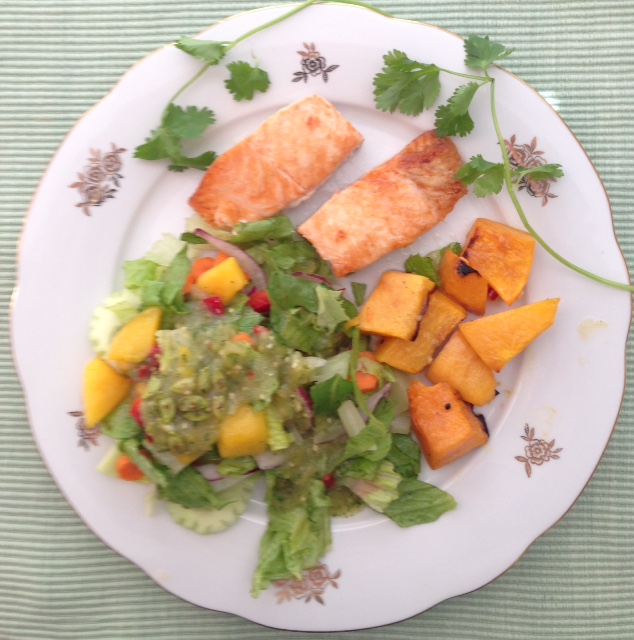
This salsa is made with tomatillos and guaje seeds. Both are used in the traditional cuisine of Mexico.

Image.GuajePods

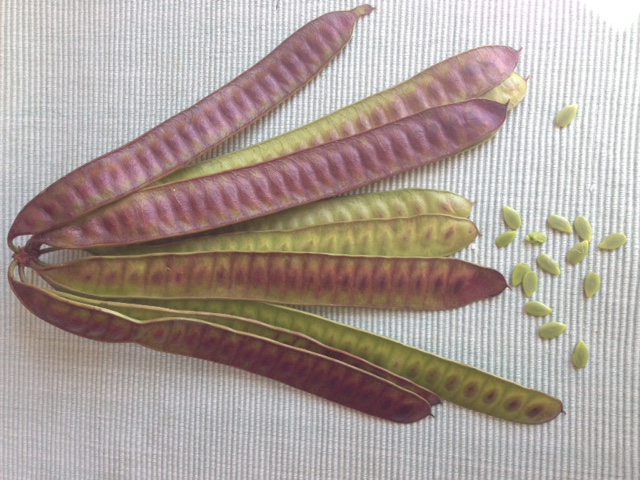
The gauge pods are about one foot in length and thin and flat. Guaje pods have a tough, outer skin which is green and red in color and slightly translucent. This allows seeds to look like spots along the length of the pod. The seeds are small, flat and light green with a sharp flavor. They are high in protein.

Guaje seeds are incorporated in this delicious green salsa from the city of Puebla. Enjoy the salsa with fish, meat or chicken or as a dressing for a green salad.

Prep time: 20 to 25 minutes (toasting the seeds & boiling the tomatillos)
Makes: 2 to 2-1/2 cups salsa

Ingredients:
8 to 9 tomatillos, skin removed and discarded and fruit rinsed in water
2 dried red chiles or 1 Serrano chile
8 to 10 guaje pods (found in Latin American supermarkets)
1 whole garlic clove, peeled
2/3 cup fresh cilantro leaves
Dash cumin
Salt, to taste

Directions:
1. Place tomatillos and chile(s) in a 3-quart saucepot. Cover with cold water and bring to a boil – tomatillos will become tender after a 5 to 7-minute boil.

2. Meanwhile, using a sharp, pointed knife, split the gauge pod skins at the top. Open the pod skins lengthwise and remove the guaje seeds. Set them aside in a small bowl.

3. Transfer seeds to a nonstick skillet set on medium-high heat.

4. Using a spatula or wooden spoon, toss the seeds as they roast. As they begin to “pop”, immediately set heat on low and continue toasting until they are light golden brown.

Image.GuajeToasted

5. Transfer seeds to a bowl; set aside to cool while tomatillos are cooking.

6. If tomatillos are tender when pierced with a fork, they are done. Drain tomatillos and chile(s) over a sink in a colander, reserving 3/4 cup of the cooking liquid.

7. Let tomatillos and chile(s) cool for about 5 minutes.

8. After tomatillos and chile(s) have cooled, transfer them to a blender with remaining ingredients except for the seeds.

9. Puree the salsa and taste it. If needed, add a dash more salt.

10. Pour the green salsa into a serving bowl and top it with the toasted guaje seeds.

11. Serve immediately. Alternatively, cover the salsa with plastic wrap and store it in the refrigerator up to 1 day (after 2 days, the salsa’s flavors will become tart and acidy).

Note: You can serve Green Salsa with Guajes as a salad dressing – this is how I like it!
Image.Salmonw.GreenSalsa
Text and Photographs ©2016 Nancy DeLucia Real

Strawberry-Nectarine Salsa

In Fruit and Jams, Salad Dressings, Salsas & Savory Sauces On August 14, 2015 0 Comments

I can’t help thinking that fruit is the sweetest gift that Nature has given us. While I enjoy all types of fruit in its natural state, I also like to be creative with it.

This salsa is made with strawberries, nectarines (or peaches), green onions, Serrano chiles, lime juice, agave nectar and olive oil. It pairs well with meat, fish and poultry. Serve this strawberry-nectarine salsa at your next cookout!

Prep time: 20 to 25 minutes
Makes: 3-1/2 cups

Ingredients:
16 ounces fresh strawberries, rinsed, dried and hulled
2 to 3 fresh nectarines, peeled (peaches can be substituted for the nectarines)
4 green onions, roots and dark tips cut and discarded
1 Serrano chile, finely chopped (if chile too hot, then only use half)
Juice from 1 lime
2 to 3 tablespoons agave nectar (this can be substituted with granulated sugar)
1 tablespoon olive oil (optional)
1/4 teaspoon salt

Directions:

1. Working on a chopping board, cut each strawberry in half, vertically.

2. Chop the strawberry halves into 1/4-inch pieces and set aside in a 2 to 3-quart mixing bowl.

3. Cut the nectarines into 1/2-inch thick slices.

4. Cut each slice into 1/4-inch pieces and add these to the strawberries in bowl; set aside.

5. Cut the onions into thin circles (about 1/8-inch thick) and add them to the chopped fruit in bowl.

6. Add the chopped Serrano chiles and lime juice to the fruit mixture in bowl.

7. Gently stir in the agave nectar, olive oil and salt.

8. Stir the salsa thoroughly and taste it. Adjust seasonings, if necessary.

9. Serve salsa immediately or refrigerate it up to 3 hours ahead.

NOTE: This salsa will last until the next day. Howevever, the fruit’s texture will change.
Text and Photograph ©2015 Nancy DeLucia Real

Basil Almond Pesto

In Salad Dressings, Salsas & Savory Sauces On June 14, 2012 0 Comments

At this time of year there’s no doubt that herbs are the rage. My home garden is lush with beautiful green leaves –  parsley, cilantro, oregano, marjoram, sage, thyme and the most important herb of all – basil.

For this pesto recipe, I combined the aromatic basil leaves with almonds. This incredible Basil Almond Pesto will help you serve great panini or pasta dishes in minutes. Don’t know about you, but with all that extra time, I’d rather go to a movie or enjoy a great outdoor activity such as biking on a mountain trail or rollerblading at Santa Monica Beach.

Prep time: 10 minutes
Makes: 1 pint

Ingredients:
1 clove garlic
1 teaspoon salt
1/3 cup whole almonds (unroasted and unsalted)
2 cups fresh, Italian flat parsley leaves, slightly packed (washed and spun dry)
2 cups fresh basil leaves, slightly packed (washed and spun dry)*
1/4 cup grated Pecorino Romano cheese
1/2 cup olive oil
2 to 3 tablespoons vegetable oil
1. In a food processor, grind the garlic and salt.

2. Add the almonds and process until they are ground (make sure they do not turn into a paste).

3. Open the food processor cover and add the parsley and basil leaves, making sure they fit inside barrel. Cover and process until the leaves and almonds have combined and the pesto has formed.

4. Add the cheese and process once more until mixture is uniform.

5. With the motor running, slowly pour the oil into the pesto in a thin stream.

6. Using a spoon, transfer the pesto to a glass jar, flattening the top. Gently and slowly pour the vegetable oil over top of pesto to seal it (this will prevent the pesto from blackening). Cover and refrigerate.

Pesto sauces keep in refrigerator up to 3 weeks. Whenever using small amounts of pesto, make sure the remaining portion inside jar is covered with vegetable oil.

Pasta with Basil Almond Pesto – Serves 4:

1. While waiting for one pound of pasta to cook, spoon about 3/4 cup pesto into a glass or porcelain serving bowl.

2. Drain the pasta and immediately transfer it to the bowl with the pesto. Gently toss the pasta until it is evenly coated with the pesto.

3. For a creamier texture, add 2 to 3 tablespoons whipping cream and toss.

Serve immediately and ask guests to sprinkle some grated cheese over their pasta, if desired.

Pesto can also be used as a spread on toasted Italian or French bread and in panini.

*Note: After basil leaves have been spun dry, lay each leaf flat on paper towels. Using another paper towel, pat each leaf dry, on both sides. This will prevent the leaves from blackening.

Text and Photograph ©2012 Nancy DeLucia Real